304 vs 201 Stainless Steel: The Hidden Supply Chain Reality
Key procurement answer
A procurement manager's field notes on material grades, corrosion risks, and why 'food grade' on a spec sheet doesn't always mean what you think it means.
In my fifteen years managing OEM projects for corporate supply chains, I've seen the same scenario play out in factory meeting rooms from Guangdong to Zhejiang more times than I can count.
A procurement officer asks, "Is this food grade?"
The factory rep nods enthusiastically. "Yes, yes, food grade. High quality."
And technically, they might not be lying. But in the world of stainless steel drinkware, "food grade" is a term that can stretch dangerously thin. For New Zealand businesses procuring branded merchandise, the difference between what is promised on a quote and what arrives in the container often comes down to three digits: 304 and 201.
This isn't a sales pitch for premium materials. It's a look at the metallurgy, the economics, and the risks that sit on your desk when you're comparing two quotes that look identical but differ by 15% in price.
The Metallurgy of "Good Enough"
To the naked eye, a polished 201 stainless steel bottle looks exactly like a 304 (18/8) bottle. They have the same weight, the same shine, and the same cold touch. The difference lies in the invisible recipe of the alloy.
304 Grade (18/8): The industry standard for a reason. It contains 18% chromium and 8% nickel. That nickel is expensive, but it's the magic ingredient that forms a passive oxide layer, healing the steel when it's scratched and protecting it from rust.
201 Grade: Developed as a cheaper alternative when nickel prices spiked. It drops the nickel content to around 1-4% and replaces it with manganese. Manganese is harder, but it doesn't offer the same corrosion resistance. It's ferrous enough that sometimes—but not always—a strong magnet will stick to it, which is the "quick trick" many buyers know.
Here is the reality of the trade-off:
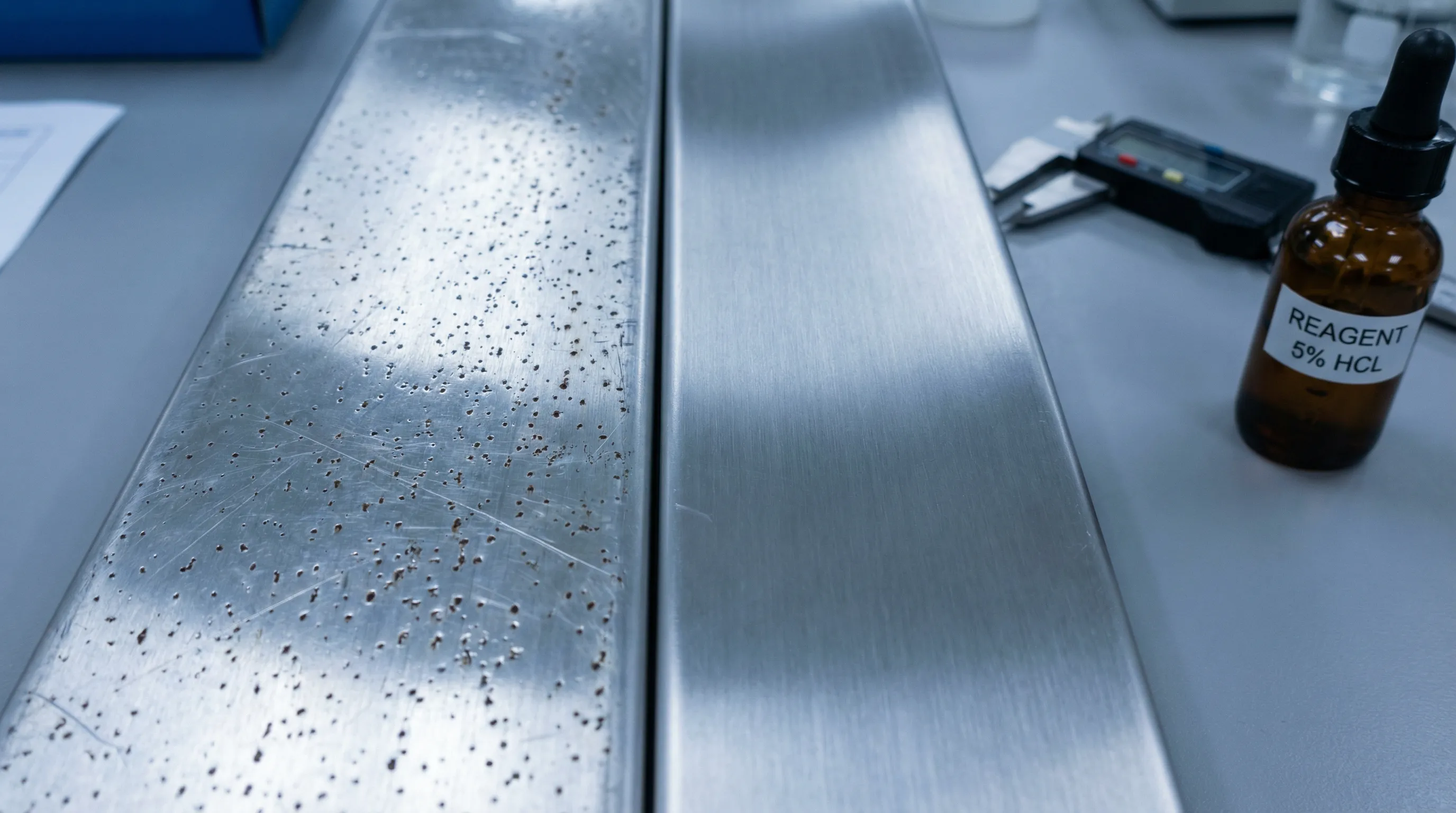
- Corrosion Risk: 201 steel will rust. It's not a matter of if, but when. In New Zealand's coastal climate, or simply if a user leaves a slice of lemon or some acidic juice in their bottle overnight, the manganese in 201 steel can react. You'll see tiny pinprick rust spots forming at the weld line at the bottom of the bottle.
- The "Metallic" Taste: Because 201 is less stable, it's more reactive with acidic beverages. That subtle metallic tang in your water? That's often the sign of manganese leaching into the liquid.
The "Golden Sample" Trap
This is where procurement gets messy. You request a sample. The factory sends you a pristine 304 grade bottle. It passes your internal review. You place an order for 5,000 units.
But unless you have a third-party inspection team performing XRF (X-ray fluorescence) analysis on the production line, there is a non-zero chance that the bulk production will be swapped for 201, or a mix of both.
I once managed a crisis for a client who had sourced 10,000 "premium" tumblers for a national rebrand. Three months after distribution, complaints started rolling in. The rims were rusting. We cut one open and tested it. The inner wall was 304 (to pass the initial "fill test"), but the outer wall and the rim were 201. The factory had saved roughly $0.40 per unit. The client lost reputation that cost significantly more than that.
"But surely we can just specify 304 in the contract?"
You can, and you should. But a contract is only as good as your ability to enforce it. In the tiered supply chain of promotional products, sub-suppliers often substitute materials to preserve their margins when raw material prices fluctuate.
The New Zealand Context: Why It Matters Here
In New Zealand, we have a unique combination of high UV, coastal salt air, and a consumer base that is exceptionally intolerant of "landfill goods."
If you are buying drinkware for a one-off event where the item is expected to be discarded, 201 might be a rational economic choice (though environmentally questionable). But for corporate gifting, staff onboarding, or retail merchandise, the risk profile changes.
A branded bottle sits on a desk for years. It becomes a daily companion. If that companion starts to rust after six months, the brand association shifts from "generous and sustainable" to "cheap and nasty."
Furthermore, while New Zealand doesn't have a specific "stainless steel bottle police," the Consumer Guarantees Act (CGA) requires goods to be of acceptable quality and fit for purpose. A "reusable" bottle that rusts within a year of normal use arguably fails that test.
The Procurement Checklist: Protecting Your Project
So, how do you navigate this without carrying a mass spectrometer to every meeting? Here are the practical steps we take for every production run:
- Specify the Grade Explicitly: Don't just say "Stainless Steel." Specify "SUS304 / 18-8 Grade" for both inner and outer walls.
- The Copper Sulfate Test: This is a destructive test, but effective. A drop of copper sulfate solution on a scratched surface of the steel will turn red on 201 steel (due to the iron displacement) but will remain clear on 304 steel. We perform this on random samples from the bulk lot.
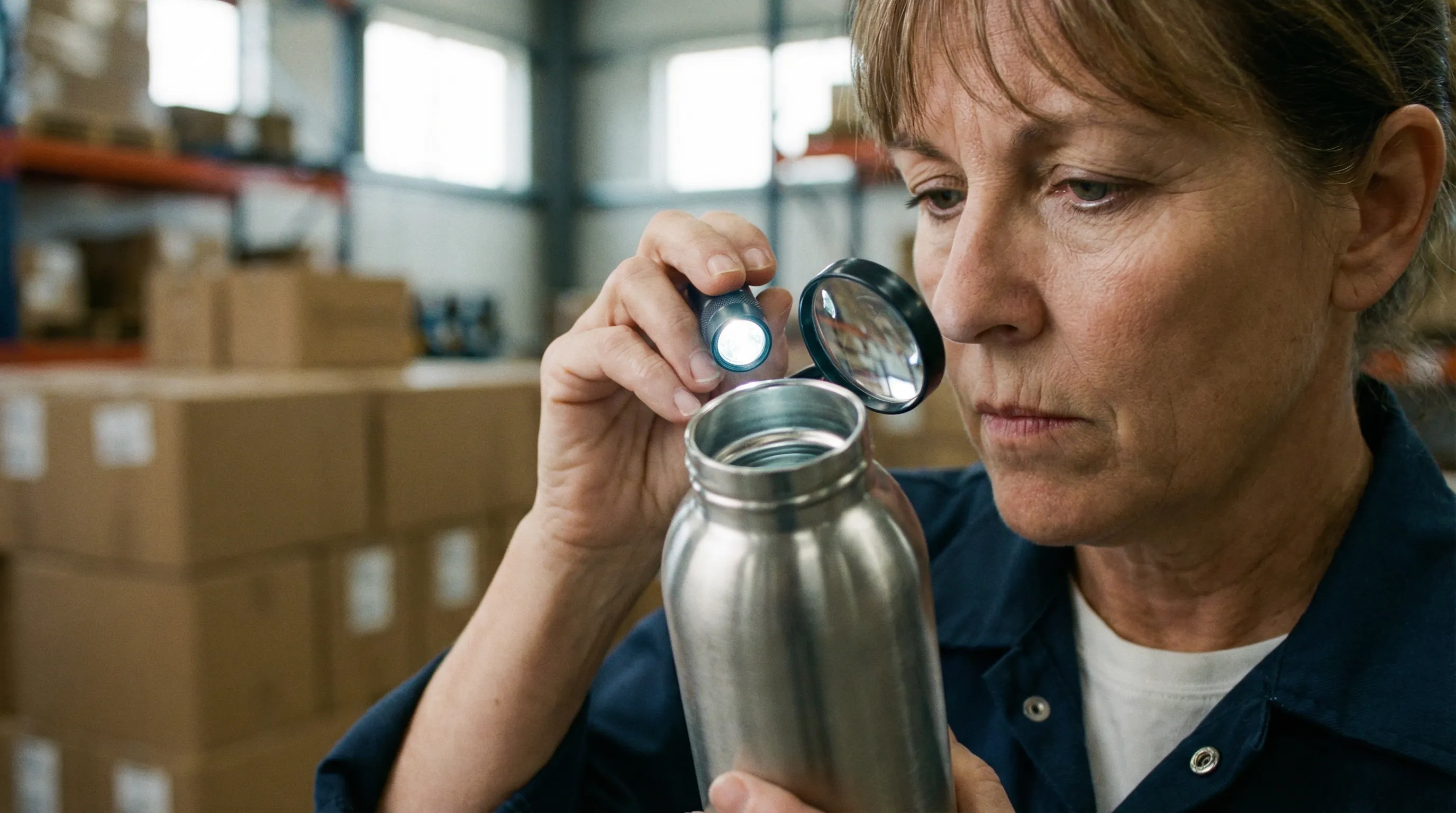
- Check the Weld Lines: The welding seam inside the bottle is the weak point. In lower-grade productions, this seam is rough and prone to immediate corrosion. A quality 304 bottle will have a smooth, electropolished seam that is barely visible.
- Weight Matters: While not a definitive test for grade, lighter bottles often indicate thinner steel walls. Standard quality is usually 0.4mm to 0.5mm thickness. Thin walls dent easily, breaking the vacuum seal and rendering the insulation useless.
The Uncomfortable Truth About Cost
There is no magic efficiency that makes 304 steel 20% cheaper. Nickel is a commodity; its price is global. If a quote seems too good to be true, it is almost certainly because the material spec has been compromised.
We often have to have difficult conversations with clients. "We can match that competitor's price," we say, "but we cannot do it with this material."
It's a choice. You can pay for the nickel now, or you can pay for the replacement later. In the world of B2B relationships, the latter is always more expensive.